How Long Does It Take to Learn Piano? A Realistic Timeline for Beginners

If you or your child are thinking about taking piano lessons, one of the first questions you probably have is, "How long does it actually take to learn piano?"
It's a reasonable question, especially when you're starting something completely new. You might be wondering whether you'll be playing recognizable songs within a few weeks, how long it takes to play with both hands, or when you'll finally feel comfortable sitting down at a piano without needing someone to walk you through every note.
You don't have to spend years taking lessons before you can enjoy playing music. Many beginners can start playing simple melodies within their first few lessons, although developing the skills to play more challenging pieces takes considerably longer and requires dedication to practice.
Of course, learning piano isn't quite as simple as following a timeline. Your age, musical interests, previous experience, and the amount of time you spend practicing all influence your progress.
At Keen School of Music in Gallatin, Tennessee, we work with students of different ages, abilities, and musical interests. Some students want to learn classical piano, while others are excited to play their favorite songs from movies, video games, or the radio. We also have adult students who are finally getting around to learning an instrument they've wanted to play for years.
Whatever brings you to the piano, it helps to understand what you can realistically expect as you begin learning.
How Long Does It Take to Learn the Basics of Piano?
For most beginners, the first one to three months of piano lessons are spent getting comfortable with the instrument and learning the fundamentals of music.
This includes understanding how the keyboard is organized, identifying notes, recognizing rhythms, and developing the coordination needed to play simple melodies. Students will also begin learning how to position their hands and use their fingers comfortably while playing.
One of the nice things about piano is that you can start making recognizable music fairly early. Unlike instruments that require students to develop their breathing or embouchure before producing a consistent sound, pressing a piano key produces a note immediately.
That doesn't necessarily make piano easy to master, but it does make those first few lessons approachable for many beginners.
Some students can play a short melody during their very first lesson, while others spend more time learning their way around the keyboard before putting a complete song together.
At Keen School of Music, our piano lessons in Gallatin, TN are designed around each student's experience level and musical interests. While learning fundamental techniques is important, we also want students to work toward playing music they genuinely enjoy.
After all, it's much easier to stay excited about learning an instrument when you can recognize the songs you're working on.
A Realistic Timeline for Learning Piano
Although there isn't a universal timeline that applies to every student, there are some common milestones that beginners can look forward to.
The following examples reflect what students might learn with regular instruction and consistent practice. This guide is meant to provide a general picture of how piano skills develop rather than establish deadlines students should feel pressured to meet.
The First Month: Getting to Know the Keyboard
During the first few weeks of piano lessons, students spend a lot of time becoming familiar with the instrument.
Something as simple as finding middle C or remembering which fingers to use can require quite a bit of concentration when you're first starting out. As students become more comfortable, those small tasks gradually begin to feel more natural.
During the first month, beginners may work on:
Identifying notes and recognizing patterns on the keyboard.
Learning basic rhythms and note values.
Developing proper hand positioning and finger coordination.
Playing short melodies with one hand.
Beginning to recognize notes on the musical staff.
Younger children may spend additional time on activities that strengthen their coordination and understanding of rhythm before moving into more complicated pieces.
For many students, one of the most exciting moments during this stage is realizing they can play something that actually sounds like a song.
It may only be a few measures long, and they might need to play it slowly, but hearing a familiar melody come together can be incredibly rewarding.
Months 2–3: Playing Simple Songs
After a couple of months of lessons, many beginners begin to recognize patterns on the keyboard and feel more comfortable moving between notes.
Students may start learning short songs that incorporate both hands, although coordinating the left and right hands can take some getting used to.
If you've ever tried to rub your stomach and pat your head at the same time, you have a pretty good idea of why this can be challenging!
At this stage, students may begin developing their ability to:
Play simple melodies using both hands.
Read basic sheet music with greater confidence.
Recognize introductory chords
Maintain a steady rhythm throughout a short song.
Move between notes with better finger control.
Playing with both hands is often one of the first significant challenges students encounter. It's common for a student to play each hand's part correctly on its own, only to struggle when putting the two parts together. This is a normal part of developing coordination, and it usually becomes easier as students gain experience.
Months 4–6: Becoming More Comfortable and Independent
By the four-to-six-month mark, students who have been attending lessons and practicing regularly may begin noticing that certain skills no longer require as much concentration.
They might recognize notes more quickly, remember familiar finger patterns, or find that songs they struggled with a few months earlier now feel much easier. As these foundational skills become more comfortable, students can begin working on longer songs, more involved rhythms, and different musical techniques. Depending on their interests, they may also start exploring styles of music that require different approaches to playing.
For example, a student interested in pop music might begin learning how common chord progressions work, while someone interested in classical piano may spend more time developing note-reading skills and refining their technique. Neither approach is better than the other, they're simply different ways of building musical skills.
This is also a stage when students sometimes become impatient with their progress. Once the excitement of learning their first few songs wears off, they may realize that more challenging music requires patience and repetition.
Having an instructor who can introduce new challenges while keeping lessons enjoyable can make a meaningful difference during this period.
Months 6–12: Building Confidence at the Piano
After six months to a year of consistent learning, many students begin developing a stronger sense of independence at the piano.
Rather than needing help with every note, they may be able to work through sections of a new song on their own, recognize familiar musical patterns, or correct some of their mistakes without assistance.
Students at this stage may be ready to explore:
Longer pieces with more challenging rhythms.
Additional chords and scales.
Different musical styles and techniques.
Basic improvisation or songwriting.
Preparing a song for a recital or performance.
For students who enjoy performing, preparing a piece to share with an audience can be an exciting goal.
At Keen School of Music, we offer recital and performance opportunities throughout the year because we believe sharing music is an important part of the learning experience.
However, performing isn't everyone's favorite thing, and that's okay too. Some students love being on stage, while others are happiest playing for themselves or their families.
The important thing is that they're continuing to develop their skills and finding enjoyment in making music.
Years 1–3: Moving Beyond Beginner Piano
Once students have spent a year or more learning piano, their lessons may begin looking quite different from those early months.
With a stronger foundation in place, they can start exploring more complicated music and developing skills that align with their individual interests.
Some students become interested in intermediate classical pieces, while others want to learn jazz, play music by ear, or begin writing their own songs. During this period, students may continue developing their knowledge of music theory, scales, chord progressions, and more advanced techniques.
They may also become more comfortable learning unfamiliar songs without relying as heavily on their instructor.
Of course, reaching an intermediate level doesn't mean students suddenly stop encountering difficulties. More challenging music introduces new techniques, and even experienced pianists have pieces they need to work through slowly.
As students continue learning, their progress becomes less about how many songs they can play and more about the musical skills they're developing along the way.
How Long Does It Take to Get Good at Piano?
This is where things get a little subjective, because being "good" at piano can mean something different to everyone.
For one student, the goal might be learning enough chords to play their favorite pop songs. For another, it might mean reading sheet music comfortably or performing a challenging classical composition.
Someone who wants to accompany themselves while singing may focus on developing chord knowledge and rhythm, while a student interested in advanced classical repertoire will need to spend considerably more time developing technique and reading skills.
If your goal is to play a few familiar songs, you may begin working toward that within your first few months of lessons. Developing the confidence to read music independently and play a wider variety of pieces generally takes longer, often a year or more.
Advanced piano skills, particularly those involved in classical performance or jazz improvisation, typically require several years of continued study.
One thing we encourage students to understand is that you don't have to be an advanced pianist to be a musician.
If you've learned to play a song you love, developed a better understanding of music, or gained the confidence to play in front of someone else, those are accomplishments worth being proud of.
What Affects How Quickly Someone Learns Piano?
While the amount of time you've been taking lessons certainly matters, it isn't the only factor that determines how quickly you'll progress.
Age and Development
Children and adults often approach learning piano differently.
Young children are still developing their fine motor skills, attention spans, and ability to recognize written patterns. Because of this, their earliest lessons may involve more repetition and activities designed to build those foundational skills.
Older children, teenagers, and adults may understand certain musical concepts more quickly because they already have stronger coordination and reading abilities.
However, adults can also be harder on themselves when learning something new, particularly when they understand what they're supposed to play but can't quite get their fingers to cooperate.
There's no perfect age that guarantees faster progress. Students of all ages can learn piano, although the way they're taught should reflect their individual needs and development.
Musical Interests and Goals
The type of music you want to learn can influence the skills you focus on during lessons.
Someone who wants to play contemporary music using basic chords may work toward different goals than someone interested in learning classical piano.
For example, a student might learn a simplified version of a favorite song relatively early, while a more advanced arrangement of that same song could take months to master.
If you're still deciding whether piano is the best starting point for your child, we've also put together a guide comparing piano vs. guitar and which instrument your child should learn first.
Consistent Practice
Learning piano involves developing muscle memory, coordination, and familiarity with musical patterns, all of which improve with repetition.
Students who regularly return to the piano between lessons generally have more opportunities to reinforce what they've learned.
That doesn't mean beginners need to practice for hours every day. In fact, shorter, focused practice sessions are often more manageable, particularly for younger students who are still developing their attention spans.
If you're wondering how much time you or your child should spend practicing between lessons, we break that down in our article, How Often Should You Practice an Instrument? A Realistic Guide to Music Practice.
Finding the Right Instructor
A piano instructor does much more than teach students which notes to play.
They also help students develop proper technique, understand musical concepts, recognize mistakes, and work through challenges that might otherwise become frustrating.
For beginners, having someone who understands how to explain concepts in a way that makes sense to them can make learning much more enjoyable.
Our music instructors at Keen School of Music come from a variety of musical backgrounds and bring their own experience and teaching styles into the classroom.
Aaron Keen, co-owner of Keen School of Music, has experience in performance, composition, and teaching across multiple instruments.
Ryder Smith has a background in piano, music theory, and composition, helping students explore musical concepts while developing their playing skills.
Finding an instructor who understands your goals and can adjust their teaching approach as you grow is an important part of building a positive learning experience.
Is Piano Difficult to Learn?
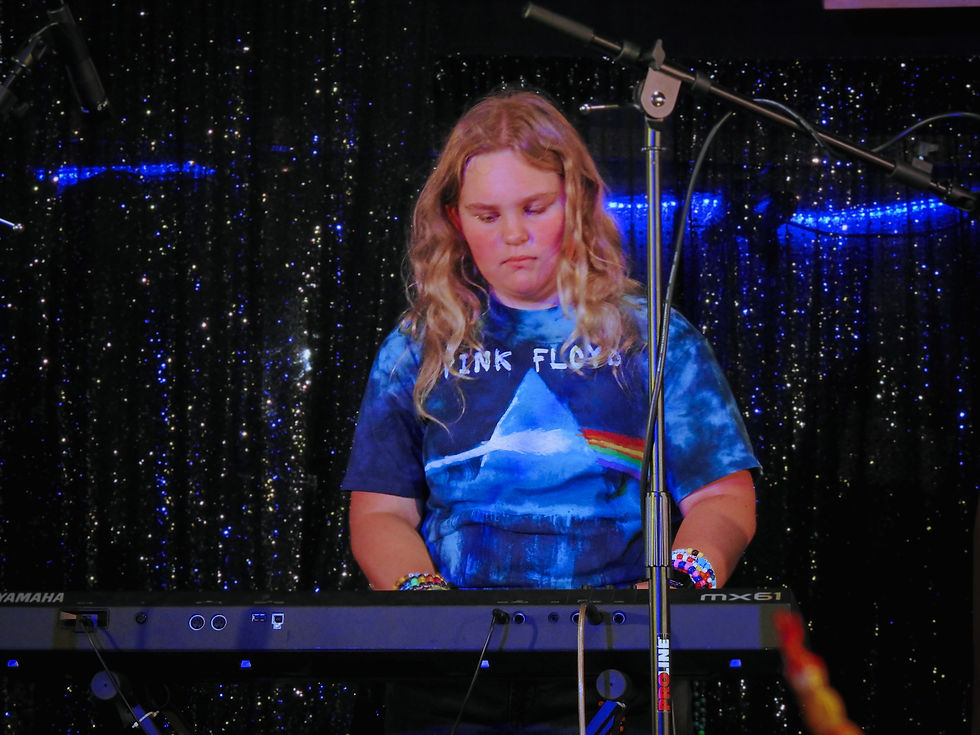
Piano is a wonderful instrument for beginners, but like any musical skill, it comes with challenges.
One reason piano is approachable is that students can produce clear notes immediately without first learning how to create a consistent sound.
However, as students progress, they must learn how to coordinate both hands, read music, maintain rhythm, and develop control over their fingers.
One of the more interesting challenges of learning piano is that your brain may understand what you're supposed to do long before your hands can actually do it.
You might know exactly which notes to play, but getting your fingers to move in the correct order can still require plenty of repetition.
There are also days when a song you played well during your previous lesson suddenly feels more difficult than you remember.
This doesn't mean you've forgotten everything or that you're doing something wrong.
Learning a musical instrument involves developing several skills simultaneously, and progress isn't always noticeable from one day to the next.
With time, patience, and proper instruction, those difficult sections gradually become more manageable.
Can Adults Learn Piano as Quickly as Children?
Absolutely, and in certain areas, adults may even progress more quickly.
Adults generally have more developed coordination, stronger reading skills, and a greater ability to understand abstract concepts, which can be helpful when learning music theory or recognizing patterns.
They may also have a clearer understanding of what they want to accomplish.
An adult who wants to learn a particular song, for example, may be highly motivated to practice the skills needed to play it.
However, adult students sometimes put unnecessary pressure on themselves to improve quickly. It's easy to feel frustrated when you're used to being competent at your job or other hobbies, only to discover that learning piano makes you feel like a complete beginner again.
Children, on the other hand, may be more comfortable with the process of learning through repetition, although their attention spans and coordination are still developing.
Both children and adults bring different strengths to piano lessons, and both can become capable musicians.
If you've been thinking about learning piano but worry that you've waited too long, there's no reason your age should stop you from getting started.
How Can You Tell If You're Making Progress?
One of the trickiest parts of learning an instrument is recognizing progress when it happens gradually.
When you're working on a new skill every week, it's easy to focus on what you still can't do instead of noticing how much you've already learned.
For beginners, progress might look like finding notes more quickly, playing a familiar song without stopping, or finally coordinating both hands through a difficult section.
As students gain experience, they may notice that they're able to recognize musical patterns, correct mistakes independently, or learn new songs with less assistance.
Parents may also notice changes outside of the music itself. A child who was initially hesitant to try something unfamiliar may become more willing to work through challenges or perform in front of others.
It's also worth remembering that students don't necessarily learn a new song during every lesson.
Sometimes an entire lesson may be devoted to improving rhythm, correcting hand positioning, or understanding a musical concept that will make future pieces easier to learn.
Those lessons are just as valuable as the ones where students come home excited to show off a brand-new song.
If you're unsure whether you or your child are progressing at an appropriate pace, talk with your instructor. They can help you understand which skills are developing and what the next steps might look like.
So, How Long Does It Really Take to Learn Piano?
If you're hoping for a general timeline, here's a reasonable way to think about the first few years of learning piano.
Time spent learning | What beginners might accomplish |
First few weeks | Recognizing notes and playing short melodies |
1–3 months | Playing simple songs and beginning two-hand coordination |
3–6 months | Developing confidence with rhythms, chords, and beginner pieces |
6–12 months | Playing longer songs and becoming more independent |
1–3 years | Exploring intermediate music, different styles, and more advanced techniques |
3+ years | Continuing to develop advanced skills, musical expression, and technique |
These milestones are general estimates, and some students will reach them sooner or later depending on their goals, experience, and practice habits.
What matters most is understanding that learning piano is a gradual process, and you don't need to wait until you've mastered the instrument to enjoy playing it.
Some of the most memorable moments happen early on, whether it's a child playing their first recognizable song or an adult finally learning a piece they've wanted to play for years.
As students continue building their skills, those early accomplishments become the foundation for everything they'll learn next.
Start Learning Piano at Keen School of Music in Gallatin, TN
If you or your child have been thinking about taking piano lessons, you don't need any previous musical experience to get started.
At Keen School of Music, we offer personalized music instruction for children, teens, and adults in Gallatin, Tennessee. Whether you're interested in classical piano, contemporary music, or simply learning to play for your own enjoyment, our instructors can help you build the skills needed to reach your goals.
Our approach to private music lessons allows students to learn at a pace that works for them, with instruction tailored to their interests and abilities.
We know that starting something new can feel intimidating, especially when you've never played an instrument before. That's why we want students to feel comfortable asking questions, making mistakes, and learning as they go.
Interested in giving piano a try?
Learn more about our piano lessons at Keen School of Music and find out how to get started. We'd love to help you or your child discover the joy of playing music!


Comments